
PSYCHOTHERAPY FOR EXISTENCE IN A CHANGING WORLD
WELCOME
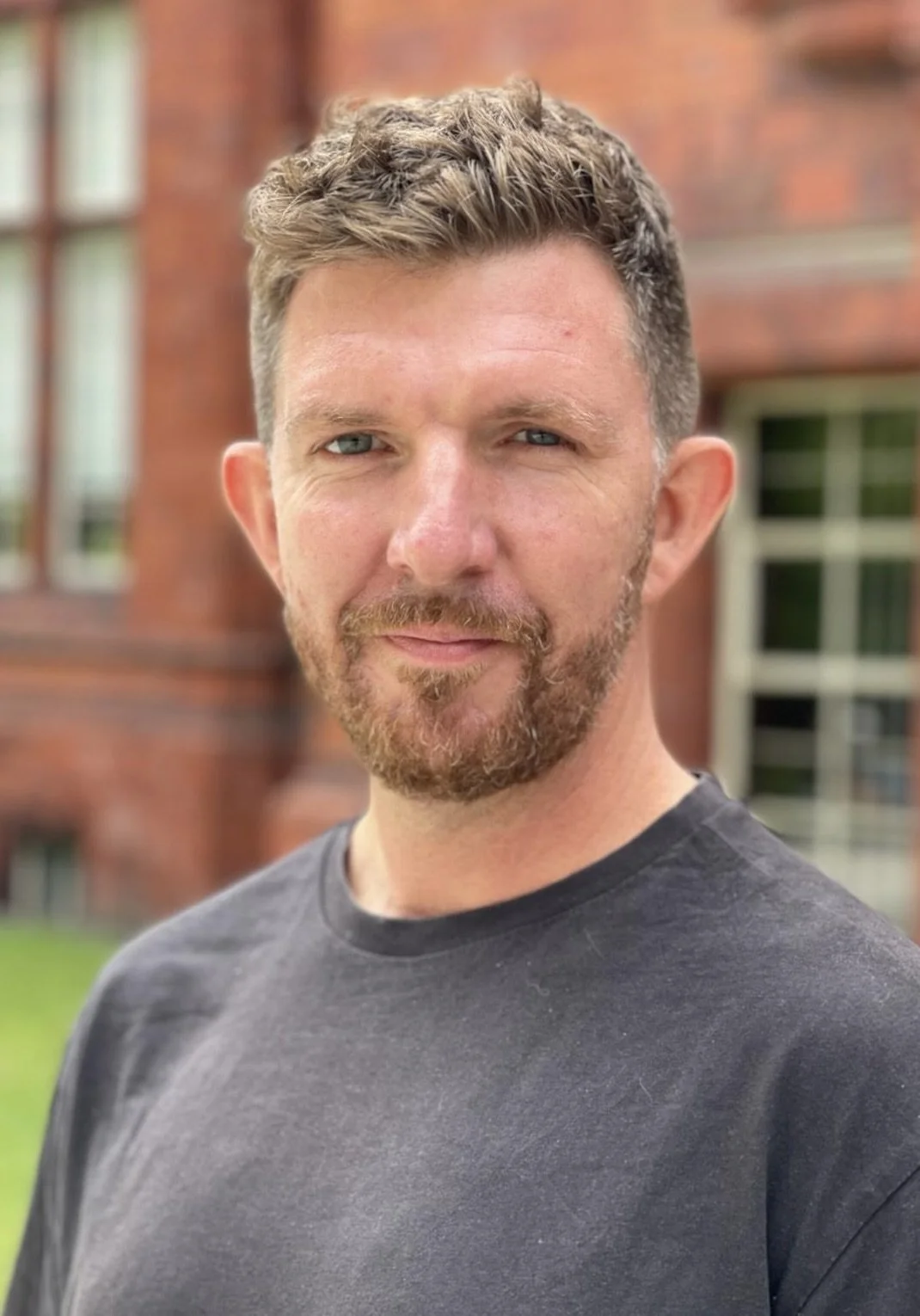
I’m Hannes, an Integrative Psychotherapist offering face-to-face therapy in Levenshulme, Manchester, as well as online sessions across the UK.
You may be feeling stuck, disconnected from yourself, or uncertain about the direction your life is taking. Perhaps you’re struggling in a relationship, finding yourself caught in familiar patterns, trying to make sense of a change or loss, or questioning something about yourself and your life.
Sometimes there isn’t a single problem to solve. You may simply have a sense that something in your life no longer feels quite right. We can try to understand what is happening more fully, consider different perspectives, and think about the choices available to you and how you want to live.

MY APPROACH
My practice brings together different ways of thinking about psychotherapy, with a strong grounding in existential therapy. I’m interested in how we live with uncertainty, choice, responsibility, relationshiips and loss, and the question of what gives our lives meaning.
Much of my attention is on what you are telling me and how you are telling it. I listen for recurring themes, changes in tone and places we find ourselves returning to. Alongside this, humanistic, person-centred and psychodynamic ideas can help me think about and make sense of what I am hearing.
I also pay attention to what happens between us. Familiar ways of relating can sometimes emerge within therapy and become something we can think about together.
I don’t expect therapy to follow a straightforward path. Our understanding can change over time, and something that was previously outside our awareness may become possible to recognise later.
Existential thinking doesn’t provide a particular answer for how a person should live. It informs some of the questions I hold in mind as we consider how you experience yourself and your world, and how you want to live.
ABOUT ME
Having somewhere to speak freely and think with another person has been valuable in my own life, and my experience of therapy contributed to my decision to become a psychotherapist.
I originally trained in social work, which gave me an early grounding in anti oppressive practice. More recently, I have spent five years working in young people’s mental health alongside developing my private practice.
Outside of therapy, I find clarity in being outdoors, particularly near the ocean. I’m queer and committed to practising in a way that is inclusive and attentive to difference, identity and the wider contexts of people’s lives.
QUALIFICATIONS & PROFESSIONAL MEMBERSHIP
I hold a Postgraduate Diploma in Integrative Psychotherapy and am a member of the British Association for Counselling & Psychotherapy (BACP membership number 413739).
I work within the BACP Ethical Framework and undertake regular clinical supervision and continuing professional development.
I am registered with the Information Commissioner’s Office (ICO) and work in accordance with UK data protection requirements.
WHAT MIGHT BRING YOU TO THERAPY
We use words such as anxiety, depression and trauma to describe experiences that many people share, but these words can only tell us so much. The same difficulty can mean something quite different from one person to another.
I’m interested in how a difficulty is experienced by you and how it makes sense within the wider context of your life. What has shaped it? How does it affect the way you experience yourself, your relationships and the possibilities available to you?
The descriptions below are some examples of what might bring someone to therapy. They often overlap and connect with other aspects of our lives.
-
Relationships involve continually negotiating how close we allow another person to come. Intimacy asks us to let down some of our boundaries and defences, while still retaining a sense of ourselves as separate people with our own needs, wishes and choices.
You may find closeness difficult, worry about rejection or abandonment, lose a sense of yourself within relationships, or keep enough distance that it becomes difficult to feel known. Shame can also leave us fearing what might happen if another person sees parts of ourselves that we would rather keep hidden.
We can explore how you navigate closeness and separation, dependence and autonomy, and what you have come to expect from other people. Because therapy is itself a relationship, some of these questions may also become present between us.
-
Anxiety can leave us preoccupied with what might happen and whether we will be able to cope with it. You may find yourself anticipating different outcomes, avoiding situations that feel uncertain, or trying to gain control over something that cannot be predicted.
There may be good reasons why uncertainty has become particularly difficult to tolerate. At other times, anxiety can emerge around decisions, responsibility, or the possibility of making a choice we later regret.
We can explore what seems to be at stake when you feel anxious, alongside how you respond to uncertainty and the limits of what you can control.
-
Depression can affect how we experience ourselves, other people and the world around us. It may involve sadness, numbness, withdrawal or self criticism. Life can begin to feel narrowed, with fewer possibilities available and less sense of how things might change.
At times this can become a sense of despair. The future may feel closed off, or it may become difficult to imagine that anything we do could make a meaningful difference. We can become caught in ways of seeing ourselves and our circumstances that feel increasingly fixed.
Through dialogue, we might explore what has contributed to this narrowing, what has become difficult to express or pursue, and whether possibilities that have become difficult to see can gradually come back into view.
-
Difficult or overwhelming experiences can continue to affect us long after they have happened. This may become apparent in relationships, in how safe we feel with other people, or in the ways we have learned to protect ourselves.
Trauma can also change something more fundamental in how we experience the world. An experience that could not have been anticipated may disturb assumptions we previously took for granted, including that life is reasonably predictable or that certain things simply won’t happen to us. The world afterwards may not feel quite like the world that existed before.
Our experience of trauma is also shaped by what happens in relationship. This may concern harm that took place within a relationship, but also whether there was someone able to recognise what we were going through and stay alongside us when it happened. At its most profound, trauma can leave us feeling very alone with an experience that other people seem unable to understand.
Within the relationship between us, we can begin to approach that experience together and explore how it continues to shape your way of being in the world.
-
Our sense of who we are develops in relation to other people and the world we live in. Sexuality, gender, culture, class, disability, family and community can all contribute to how we understand ourselves and where we feel we belong.
You may be questioning aspects of your identity, trying to reconcile different parts of yourself, or finding that who you are doesn’t sit easily with expectations placed upon you. Questions of belonging can become particularly difficult when we feel that some parts of ourselves are more welcome than others.
Discrimination, marginalisation and inequality have real consequences for how we experience ourselves and other people. These wider realities are part of the context in which our difficulties are lived.
-
Sex and sexuality can be difficult to talk about, particularly where there is shame, uncertainty or a fear of being judged. You might want to explore intimacy or desire, your relationship with pornography or sexual behaviour, questions about your sexuality, or difficulties that are affecting your relationships.
Our sexual lives can bring us into contact with questions about closeness, vulnerability and how we relate to our own bodies and desires. You may also be exploring polyamory or other forms of consensual non-monogamy, and want somewhere to think about what this brings up for you and within your relationships.
Through talking about these experiences, we can become curious about the place that sex, sexuality and intimacy have in your life, and whether there is something you would like to understand or change.
-
Loss can take many forms. We may lose someone close to us, a relationship, a sense of home, a role we occupied, or a future we expected to have.
Some losses change the shape of our lives permanently. We cannot return to the person or the life that existed before they happened. Over time, grieving can involve finding ways to integrate what has been lost into a life that now has a different shape.
Change can also unsettle us when it is something we have chosen. Moving home, changing work, ageing, becoming a parent, ending a relationship or beginning a new stage of life can bring unexpected questions about who we are and how we want to live now.
-
You don’t necessarily need to be in crisis to come to therapy. You may have reached a point where you are questioning how you are living, what you want, or why a life that seems fine from the outside doesn’t feel satisfying to you.
We are living through significant social, political, technological and environmental change. Climate change, war, inequality and political instability can affect how we imagine the future and the choices we make about our own lives.
For some people this brings a strong sense of responsibility or commitment to a cause. Political activism and other forms of purposeful work can give life direction, while making it difficult to step away. Rest can bring guilt when there is always more that could be done.
There may be no reassuring answer to some of these concerns. Through dialogue, we might explore what you feel called to respond to, what you can realistically carry, and how to make room for your own life alongside the commitments you have chosen.

Sessions
IN PERSON
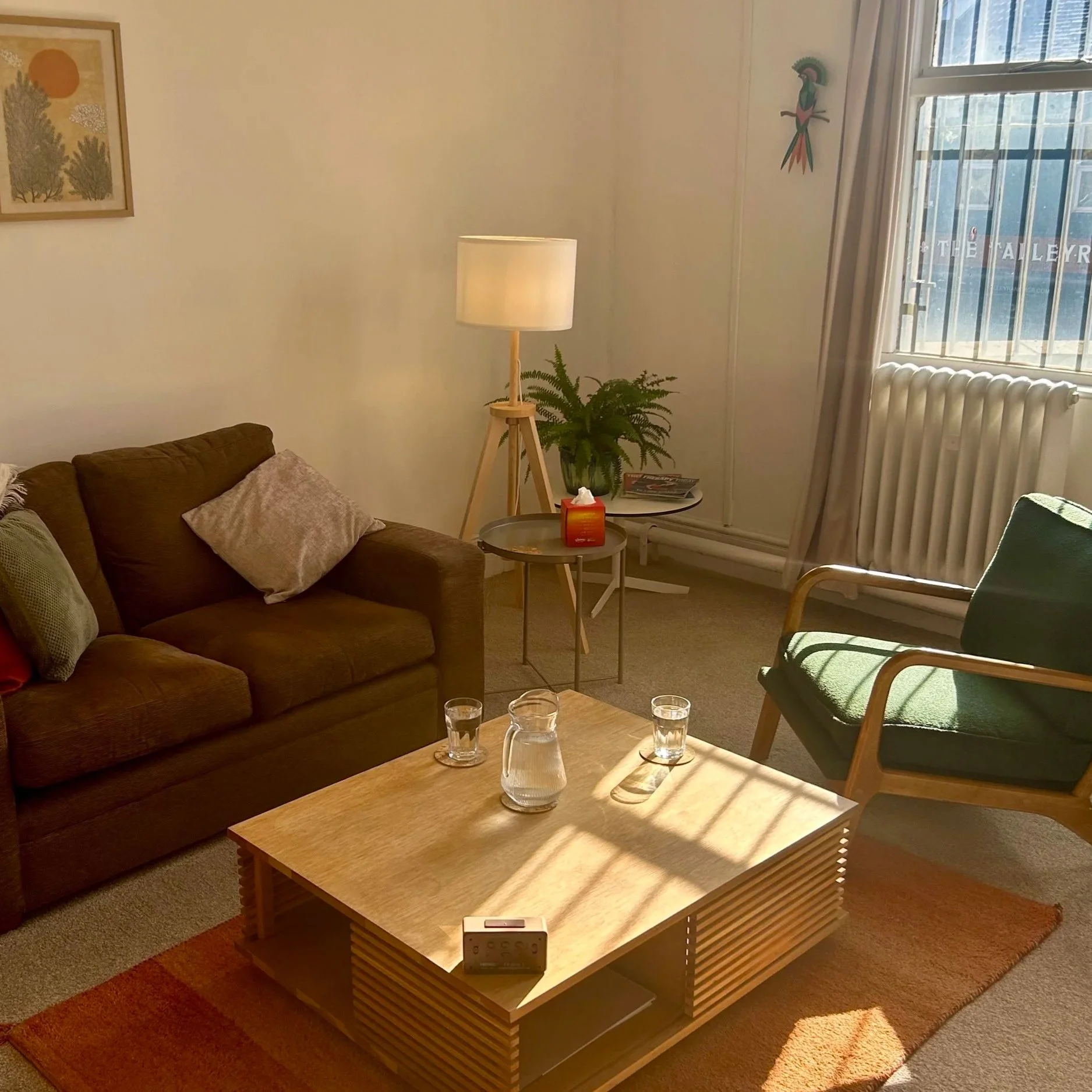
I offer face-to-face psychotherapy from my practice at Levenshulme Antiques Village on Stockport Road, Manchester, M19 3NP. The room is on an upper floor and unfortunately there is no lift access.
ONLINE
I also work online with clients across the UK.
DURATION AND FREQUENCY
Sessions last 50 minutes and usually take place weekly at the same time. This provides some continuity to the work, particularly while we are getting to know one another.
Over time, we might agree to change the frequency of sessions depending on what feels appropriate for the work.
FEES
Sessions are £65 for 50 minutes.
Getting Started
Choosing a therapist is quite personal, and you may want to speak with more than one person before deciding who you would like to work with.
I offer a free 20 minute consultation. This gives you an opportunity to tell me a little about what has brought you to therapy, ask any questions, and get some sense of how it feels to talk with me.
If you would like to arrange a consultation, complete the form and I’ll get back to you to find a suitable time.